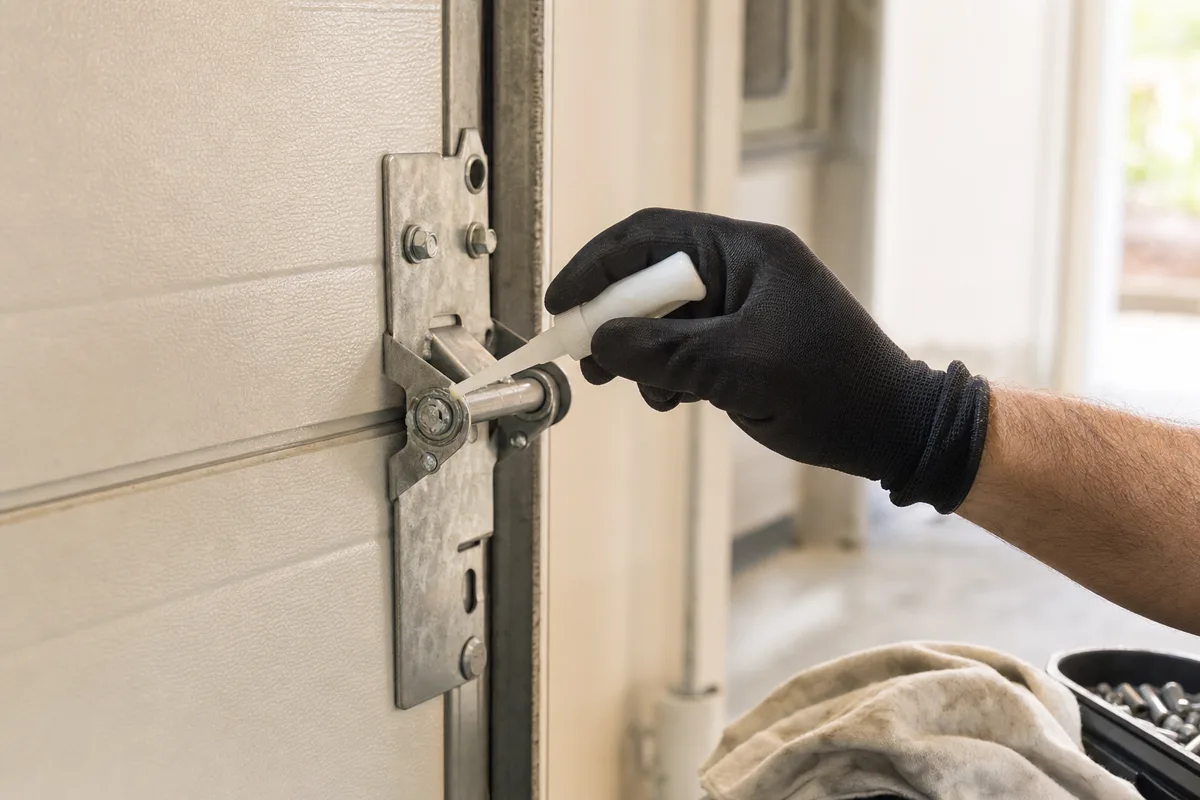

Garage Door Maintenance & Tune-Up
Preventive checks reduce friction, catch wear, and confirm safe daily operation.
View serviceA new squeal on the way up is different from a bang at the curved track or a grind from the opener. The timing of the noise matters. Listen once, with the door in full view, before deciding whether it is a minor contact point or a real repair.
Locate when the noise occurs, remove nearby objects that could be touching the door, and inspect visible rollers, hinges, and track edges with the door down. Grinding, repeated banging, roller wobble, or an opener that labours are repair signals. Lubricant may quiet an appropriate pivot, but it cannot correct roller wear, track misalignment, a cable fault, or a spring problem.
Garage doors are a system of rollers, hinges, tracks, cables, springs, and an operator that is meant to move a balanced load. A light hinge squeak can be ordinary wear; a heavy grind, sharp bang, or vibration is not. Begin by locating the sound in the travel path rather than coating parts with lubricant. A roller with a worn bearing can scrape through the curve. A hinge with excess play can rattle each time a section bends. A door that is out of balance makes the opener sound louder because the motor is carrying work the springs should provide. Watch one cycle from the side, never place hands near hinges or tracks while it moves, and stop immediately if the noise is accompanied by jerking or a change in the door's path.
Start at the top. The early checks are the most common causes and need no tools.
From a clear position, watch one complete open-and-close cycle. Note whether the noise begins at lift-off, follows a roller through the curved track, occurs at the floor, or comes from the operator. If the sound is a bang, harsh grind, or violent shake, end the test instead of trying to reproduce it.
What it means: A sound tied to one point in travel often identifies the hardware area to inspect.
With the door down, move ladders, cords, storage racks, and loose objects away from the door, track, and opener rail. Check for a loose handle, lock bar, or panel reinforcement that could rattle against the section. Do not reach behind a raised door or rest anything on the tracks.
What it means: A noise that disappears after clearing an adjacent item may not come from the door hardware.
Use a light with the door fully closed. Look for a cracked roller wheel, a wheel that sits at an angle, a loose-looking hinge leaf, or dark metal dust near a roller. Rollers should remain seated in the track and turn rather than skidding along an edge. Keep fingers outside the track and leave lower hardware untouched.
What it means: Wobble, cracking, or metal debris makes roller or hinge service the likely next step.
Sight along the vertical and curved tracks for a pinch, a gap at a joint, or a roller rubbing one edge. The track alignment sets the roller path; forcing a bent rail back with pliers can change that path further. Do not tighten lower brackets, spring hardware, cable drums, or track fasteners while diagnosing a noise.
What it means: A bent rail or roller rubbing one edge is a repair condition rather than a lubrication job.
On one observed cycle, notice whether the motor hums, clicks, or strains while the door slows. A chain or belt has normal running sound, but a sudden change can mean the opener is working against drag or that its drive components are worn. Stop if the door is not travelling smoothly.
What it means: An operator that sounds strained needs the door resistance and drive system checked.
Do not keep cycling a door that grinds, bangs, shakes, or pulls to one side. Never straighten a track, loosen a cable, or adjust a torsion spring to chase a noise. Cables under tension and lower brackets can move suddenly, and a torsion spring stores enough energy to cause serious injury. Leave the door down where practical and use the online form for a proper inspection.
On lakefront streets in Bronte, Old Oakville, and Eastlake, wind-driven moisture reaches low hardware more often than it does farther inland. Corrosion can roughen roller bearings, hinge pivots, and cable strands before the sound becomes obvious. After wet weather, look for rust staining or a roller that no longer turns freely, rather than applying heavy grease inside the track. A technician can distinguish a serviceable dry pivot from hardware that has worn past a safe repair.
Fill out the form and we'll confirm your appointment by email.
These guides are written for Oakville homes. If the fix is beyond a homeowner check, we work everywhere inside this area.
Map data © Google. Pin shows the service area, not a walk-in location — all work is done at your home.

A real callout, not stock imagery.
A sectional door pulled off its tracks, taken down and supported on site so it could be checked and re-hung safely — photographed on the job.
