
Garage Door Spring Repair
Precise counterbalance adjustments for intact springs and unevenly lifting doors.
View detailsPreventive checks reduce friction, catch wear, and confirm safe daily operation.

A garage door tune-up is a practical check of the moving system that lifts, guides, seals, and stops the door. It is intended to find developing wear before a roller seizes, a cable frays, a spring loses balance, or an operator begins working against resistance. Service includes observing door movement, checking fasteners and fixtures, examining springs and cables, lubricating appropriate pivot points, and testing balance and safety devices. Maintenance does not make worn parts new; it helps decide when a targeted repair is needed.
Regular service can reduce friction and reveal small faults, but it cannot reverse fatigue in a spring, restore a corroded cable, or straighten a damaged track. Replace parts when their condition affects safe operation, and consider a full door only when panels, structure, or compatibility issues extend beyond isolated hardware. The best maintenance result is a clear decision based on the door's present condition.
Work through the symptom first — some of these turn out to need no technician at all.
Hinges, rollers, bearings, cables, springs, and fasteners are used at every cycle. Small changes in these parts can accumulate into a noticeable change in door behaviour.
Road grit, snowmelt, moisture, and leaf debris collect near tracks, rollers, and the threshold. They increase friction and can affect seals and moving joints.
Springs can lose effective force or a cable path can change. The operator then carries more of the door weight, which can show up as slow movement or drive noise.
Photo eyes, travel limits, reversal response, and manual release operation need periodic checking. A convenience device should not be assumed safe simply because it still moves the door.
Oakville-area climate brings approximately 114.5 centimetres of annual snow and about 45 snowy days at the nearest full-service station. Winter maintenance should include clearing packed snow and road grit from the door's threshold area, then checking the bottom seal after freeze-thaw conditions. January cold near −8.9 °C can expose hardening lubricant, weak rollers, and springs nearing failure. A pre-winter check helps identify those issues before the first severe cold stretch.
Homeowners can keep the photo-eye area clear, remove loose debris from reachable tracks, and watch for broken cable strands or damaged weatherstrip. Do not adjust torsion springs, unwind cables, loosen bottom brackets, or set opener force high enough to overcome a heavy door. Torsion springs are under extreme tension and are not a DIY job. If the door is crooked, heavy, or off track, leave it unused until assessed.
The door is watched from closed to open for noise, hesitation, uneven gaps, cable travel, roller behaviour, and operator response. A smooth cycle gives context for every later check.
Tracks, supports, hinges, rollers, bearings, springs, cables, drums, brackets, and weatherseal are checked for wear, loosening, corrosion, or impact damage.
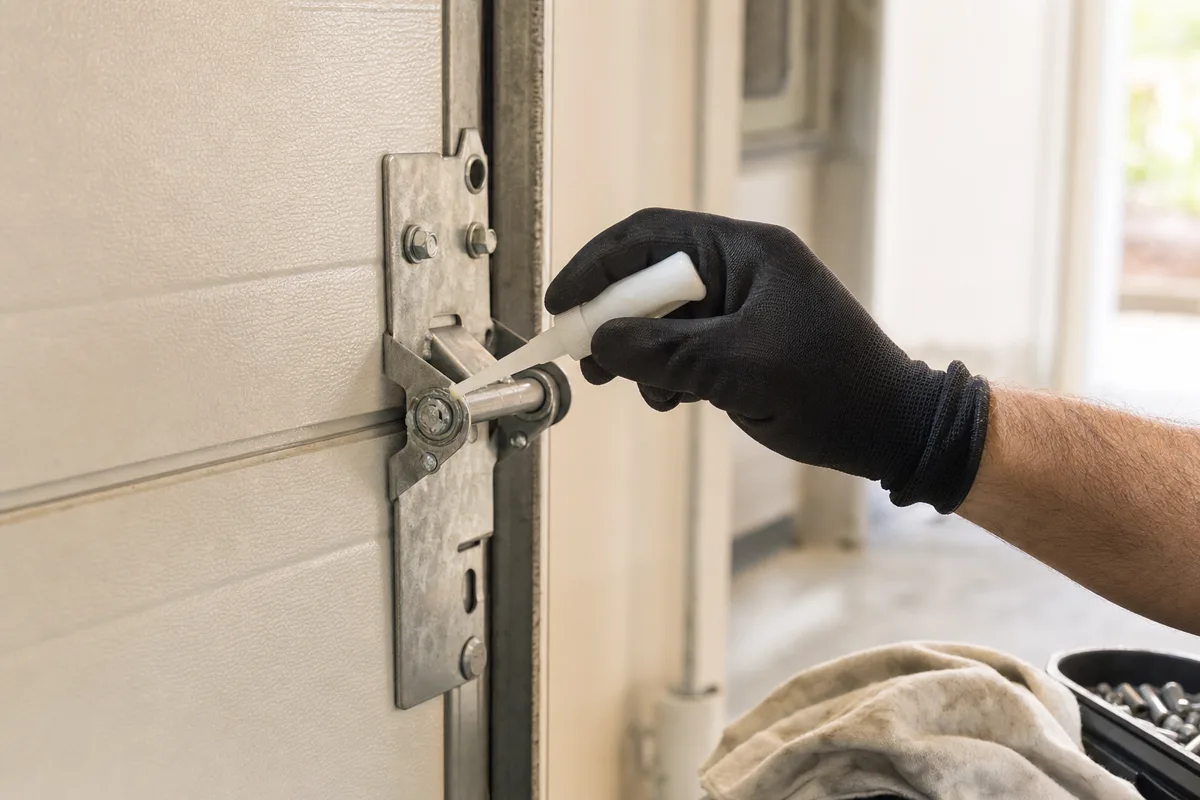
Appropriate lubricant is applied to bearings and hinge pivots where needed, while tracks are kept clean rather than heavily greased. Accessible loose hardware is tightened where it is safe to do so.
Manual balance, opener limits, photo eyes, reversal behaviour, and floor sealing are checked. Any spring, cable, or structural concern is identified rather than disguised by operator adjustments.
Precise counterbalance adjustments for intact springs and unevenly lifting doors.
View detailsWorn rollers and damaged guides corrected for smooth, quiet door movement.
View details
Diagnosing motor, sensor, control, and drive faults without masking door problems.
View detailsFill out the form and we'll confirm your appointment by email.
Garage Door Maintenance & Tune-Up is available across every Oakville neighbourhood inside the area below.
Map data © Google. Pin shows the service area, not a walk-in location — all work is done at your home.

A real callout, not stock imagery.
A sectional door pulled off its tracks, taken down and supported on site so it could be checked and re-hung safely — photographed on the job.