
Garage Door Spring Repair
Precise counterbalance adjustments for intact springs and unevenly lifting doors.
View detailsDiagnosing motor, sensor, control, and drive faults without masking door problems.

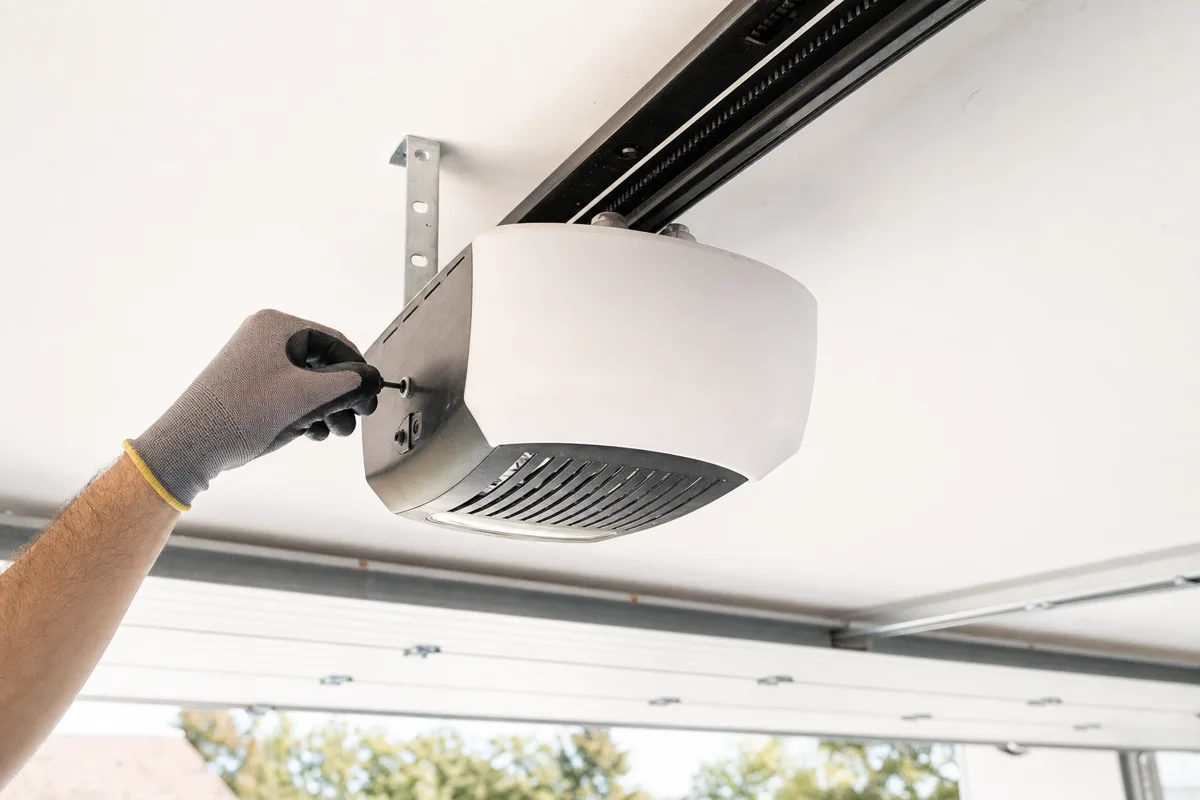
An opener moves a door that is already balanced and free in its tracks. When it hums, stops, reverses without contact, or ignores a command, the issue may be electrical, electronic, or mechanical. Good fault-finding separates an operator problem from a heavy or binding door before parts are changed. Power supply, wall control, remote signal, photo eyes, travel limits, drive system, and door balance are checked in a logical order. A healthy motor cannot compensate for failed springs or damaged tracks.
Repair is often worthwhile for a sound operator with a specific sensor, gear, trolley, remote, or limit problem. Replacement is more sensible when key parts are unavailable, the drive has repeated failures, safety functions cannot be restored, or the unit no longer suits the door. In either case, a balanced door extends operator life by reducing the load placed on its drive.
Work through the symptom first — some of these turn out to need no technician at all.
A broken spring, tight track, seized roller, or cable fault can make the operator appear weak. The powered unit should not be used to overcome a mechanical problem.
Misaligned photo eyes, dirty lenses, damaged wiring, or an obstruction can prevent closing. The system is designed to react to an interrupted beam.
A worn gear, stripped trolley, loose chain, damaged belt, or screw-drive problem can let the motor run without transferring motion correctly to the door.
Remote batteries, receiver issues, wall-control wiring, a tripped circuit, or a failed logic board can interrupt commands. Each needs testing rather than assumption.
Glen Abbey was built largely in the 1980s, so some homes have garage hardware from several renovation eras. An opener that looks newer can still be connected to original or aging hinges, rollers, and springs. When a unit begins to strain, checking the manual door before replacing electronics helps avoid fitting a new motor to a door that remains difficult to lift.
Cleaning the photo-eye lenses, changing a remote battery, and checking that power is available are low-risk checks. Do not adjust operator force to make a heavy door move, bypass the photo eyes, or work on a plugged-in unit with an exposed drive or wiring issue. If the manual door is heavy, crooked, or hard to move, leave it disconnected and address the door system first.
With the opener safely disconnected, the door is tested for balance and smooth manual movement. Mechanical resistance is corrected before any force or limit settings are changed.
Power, wall control, remotes, sensor alignment, wiring, and indicators are checked. This shows whether the unit is receiving a valid request and safety input.
The rail, trolley, belt, chain, screw, gear, and mounting points are examined for wear or damage. The appropriate repair depends on the drive type and failure location.
After reliable motion is restored, opening and closing limits are set and the reversal and photo-eye functions are checked. The door must close with normal force, not a force setting raised to mask binding.
Precise counterbalance adjustments for intact springs and unevenly lifting doors.
View details
Compatible automatic operators fitted to balanced doors with tested safety systems.
View details
Worn rollers and damaged guides corrected for smooth, quiet door movement.
View detailsFill out the form and we'll confirm your appointment by email.
Garage Door Opener Repair is available across every Oakville neighbourhood inside the area below.
Map data © Google. Pin shows the service area, not a walk-in location — all work is done at your home.

A real callout, not stock imagery.
A sectional door pulled off its tracks, taken down and supported on site so it could be checked and re-hung safely — photographed on the job.