
Garage Door Off Track Repair
Derailed doors supported, re-railed, and re-squared before they run again.
View detailsWorn rollers and damaged guides corrected for smooth, quiet door movement.

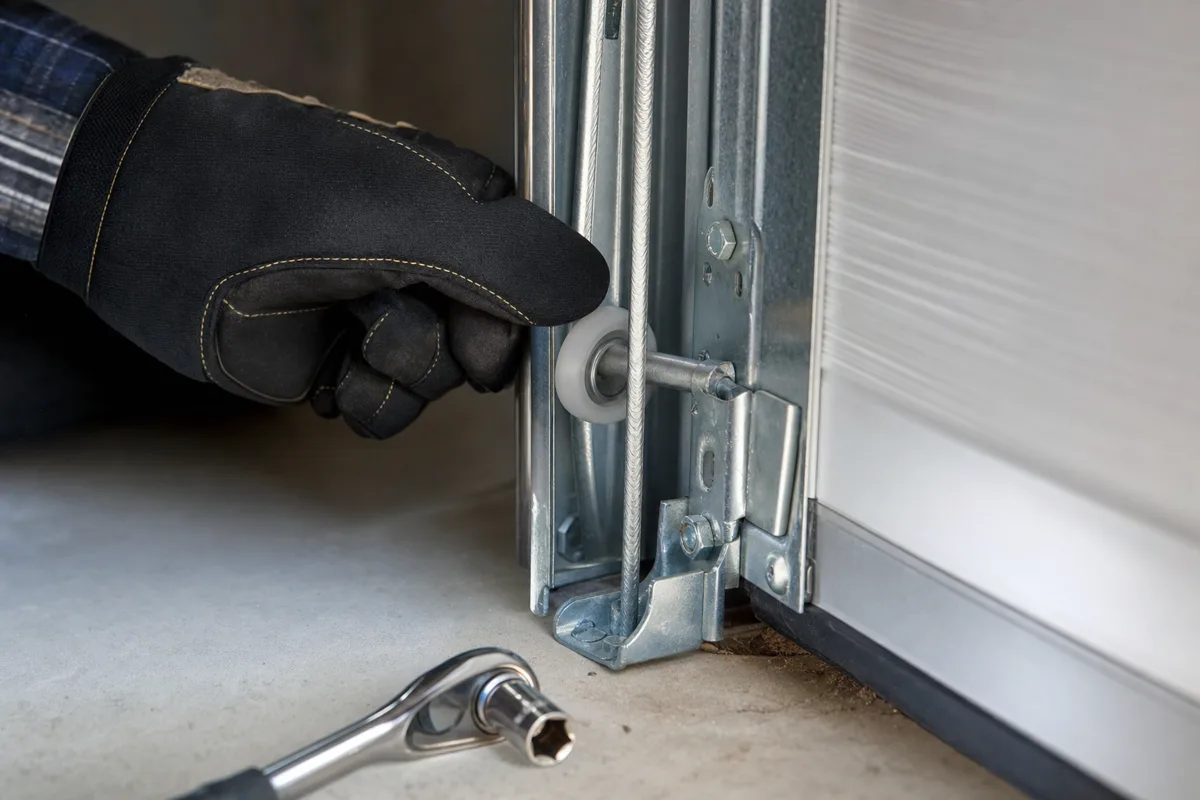
Rollers and tracks keep each door section on a defined path as it turns from vertical to horizontal travel. Squeaking, shaking, a sticking spot, or a roller that has left the track usually means the guide system needs attention. Tracks are not intended to be bent back by force while the door is loaded. The repair involves checking roller wear, hinge movement, track spacing, brackets, flag angles, and the condition of the door sections so the door can travel without side load.
Roller and track service is often a component repair, not a reason to replace a complete door. Replacement makes more sense for a deeply creased rail, a roller with a damaged stem or seized bearing, or a hinge that no longer holds the section correctly. If a panel has been pulled out of shape by an off-track event, the panel and its reinforcement should be considered separately.
Work through the symptom first — some of these turn out to need no technician at all.
A roller can develop side play, a seized bearing, or a cracked wheel. It then drags through the track instead of rolling smoothly and can pull on a hinge or section.
A vehicle, stored item, or forceful door movement can bend a track or knock a bracket loose. Even a small change in spacing can make the rollers bind at one spot.
Track brackets and horizontal supports hold the geometry of the travel path. When fasteners loosen, the door may run against a rail or move differently on each side.
Debris, corrosion, and hardened lubricant can add friction. Tracks should be clean and correctly aligned; coating the track heavily with grease usually attracts more debris.
Along Old Oakville's shoreline streets, winter moisture and lake wind can leave hinges, roller stems, and track fasteners damp for long periods. That makes early cleaning and condition checks useful before corrosion turns a quiet roller into a seized one. The remedy is not to fill the track with grease; the rail needs a clean running surface while bearings and hinge pivots receive the appropriate light lubricant.
Do not force a door with a roller out of its track. The sections can become unsupported, cables can slacken, and the door can move sideways under weight. Avoid loosening track brackets while the door is open or the springs are loaded. Clear the travel area, leave the operator off, and arrange an assessment through the online form.
The door is examined at the point where it rubs, shakes, or reverses. Both vertical and horizontal runs are checked because a fault at the curve may originate elsewhere.
Wheel condition, bearings, stems, hinge wear, and section alignment are checked. A single bad roller can be the result of a hinge or panel issue rather than an isolated wheel failure.
Damaged rollers are renewed and brackets, tracks, and supports are aligned correctly with the door. Severely creased track is replaced rather than left weakened.
The door is operated through the curve and overhead run by hand before the operator is reconnected. This confirms there is no rubbing, cable disturbance, or excessive side force.
Derailed doors supported, re-railed, and re-squared before they run again.
View details
Damaged lift cables renewed and aligned for level, reliable door travel.
View details
Damaged sections re-seated, re-anchored and reinforced — replaced only if needed.
View detailsFill out the form and we'll confirm your appointment by email.
Garage Door Roller & Track Repair is available across every Oakville neighbourhood inside the area below.
Map data © Google. Pin shows the service area, not a walk-in location — all work is done at your home.

A real callout, not stock imagery.
A sectional door pulled off its tracks, taken down and supported on site so it could be checked and re-hung safely — photographed on the job.